Vintage Automotive Services
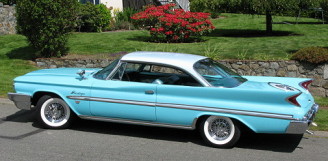
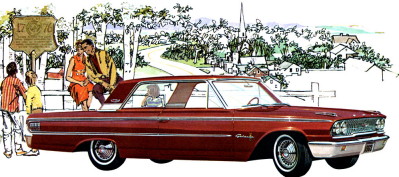

We also specialize in rebuilding, keying and re-keying vintage automotive locks which can be mailed to us for service. We stock a large selection of key blanks for older vehicles; feel free to phone or email us to see if we have yours in stock.
Finished vintage auto lock projects:
Below: trunk lock cylinder
from a 1958 Imperial Crown. This is a very complicated and a
little over-engineered side-bar pin tumbler lock, a high-security
lock for it's day. This was completely disassembled to fit a key,
(this being only method available to fit keys to this as there was
no matching glove box lock available to fit a key to). Due to the
complexity of this type of lock, and the fact that the stainless
steel caps had to be un-crimped and removed to fit a key, the
entire job was approximately 2 hours.
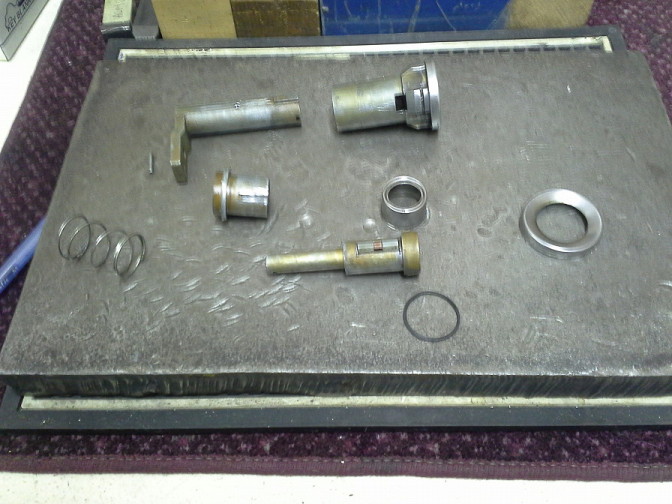
Above: disassembled 1958
Imperial trunk lock cylinder. Note that the stainless steel cap
ring and stainless steel keyhole cap had to be very carefully
un-crimped and removed in order to disassemble this lock. This
lock was never meant to be serviced by the fact that it was made
this way. There was no key code # stamped on the lock.
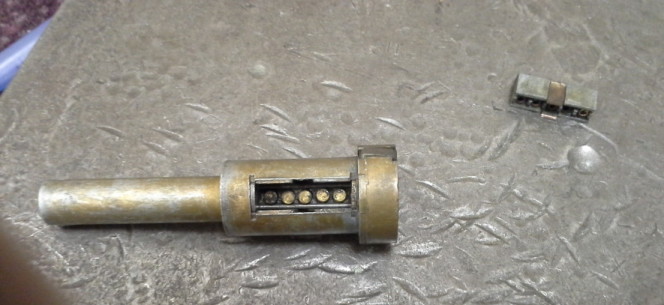
Above: 1958 Imperial
trunk lock cylinder plug showing pin tumblers with side bar
removed, sitting out at top right.
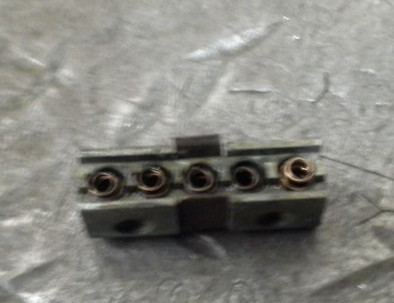
Above: 1958 Imperial trunk
lock side bar which also serves as the driver spring cover. The
side bar mechanism is the item that actually locks the cylinder.
When the key is inserted and the tumblers are lined up, it allows
the side bar to retract into the cylinder plug as you turn the
key. This is very similar to the way a modern
Medeco
high security cam lock works.
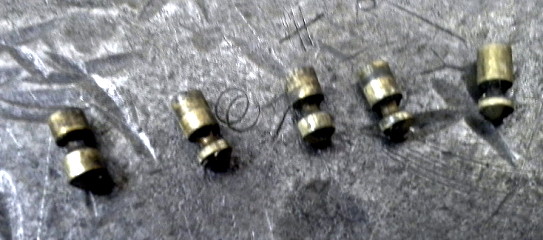
Above: Pin tumblers from
1958 Imperial trunk lock, showing grooves at various depths which
allow the side bar springs to enter once the correct key is
inserted into the lock. This then allows the side bar to retract
and let the cylinder turn to lock or unlock. Tumblers were decoded
and the key was cut using a modern ITL950 computerized code
machine to cut the key exactly like the original.
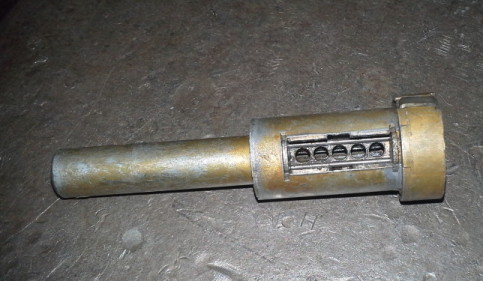
Above: 1958 Imperial
cylinder plug with pin tumblers removed. Side Bar springs can be
seen running length-ways. These springs sit in the grooves of the
pin tumblers once the correct key is inserted, which then allows
the side bar to retract when you turn the key.
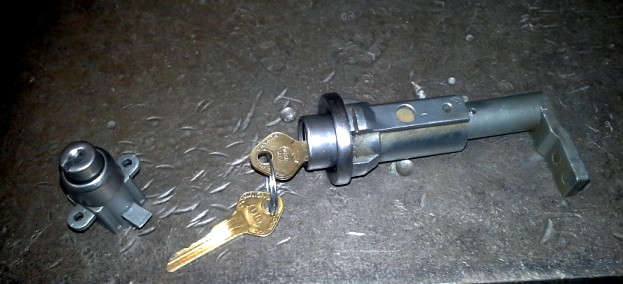
Above: finished trunk
lock cylinder with new glove box lock that was re-keyed to match
the trunk lock cylinder. The stainless steel caps were put back on
and re-crimped around the edges.
Below: 1953 Chrysler New Yorker door lock cylinder and trunk lock cylinders sent to us from Texas to fit keys. Each cylinder was carefully disassembled, all tumblers and springs removed, cleaned and replaced where necessary, and working keys to the original code were fitted to each lock.

Finished Door lock cylinder, 1953 Chrysler New Yorker

Disassembled trunk lock cylinder, 1953 Chrysler New Yorker. This involved carefully un-crimping the large round stainless steel ring cap in order to remove the cylinder from the outer housing, then the cylinder was disassembled, each pin was decoded, and a key was fitted using an ITL 950 computerized code machine to cut the key exactly as the original.
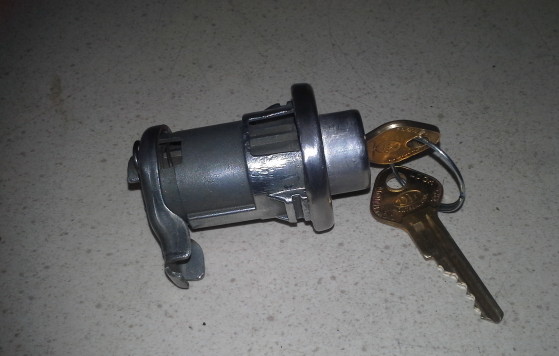
Finished Trunk lock cylinder, 1953 Chrysler New Yorker. Stainless steel ring cap has been re-crimped back onto the outer housing.

Above: 1933 Chrysler Royal door lock sent to us from Alberta, to have a key made. Customer supplied the rare Omega tyle Yale offset blanks. Since the handle had been freshly re-plated we wrapped it up as much as possible to protect it while working on it. These locks present a challenge in themselves to remove the cylinder if there is no working key. They are an example of an early high-security automotive lock.
Below:1936 Chrysler CW Airflow Lock Project
These locks were sent to us by the owner from Seattle, to fit keys and also have the front section of the cylinders re-plated before they were re-assembled. More modern auto locks have stainless steel caps rather than having the front section chrome plated. These proved to be quite a challenge after the plating was done as the process created a very nasty residue that went all through the lock cylinders, which had to be disassembled again, cleaned and re-assembled.
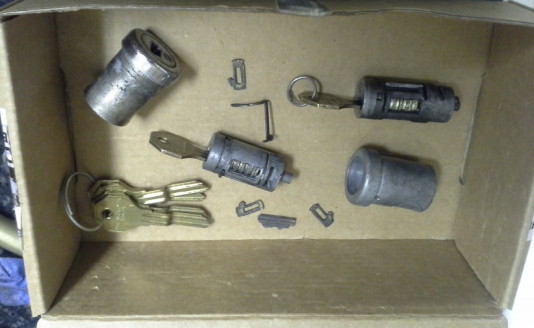
Above Box of disassembled door lock cylinders. Keys have been made at this point. These locks also use the offset Yale "Omega" keys which the customer supplied. A broken key was found and removed from the ignition lock before it was disassembled.
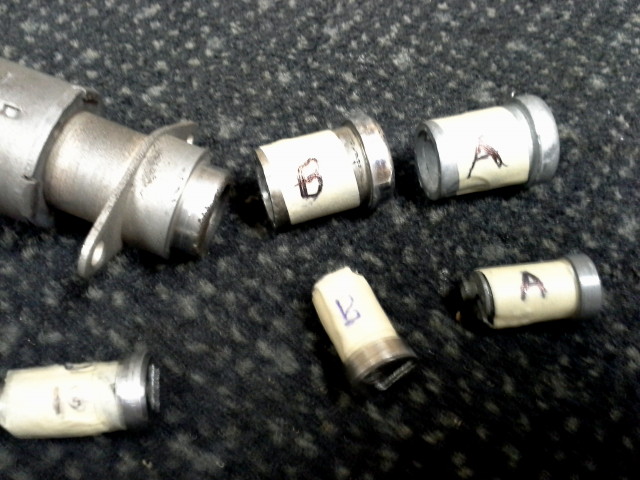
Above: Cylinders are apart and labelled prior to being taken to the Plating Shop
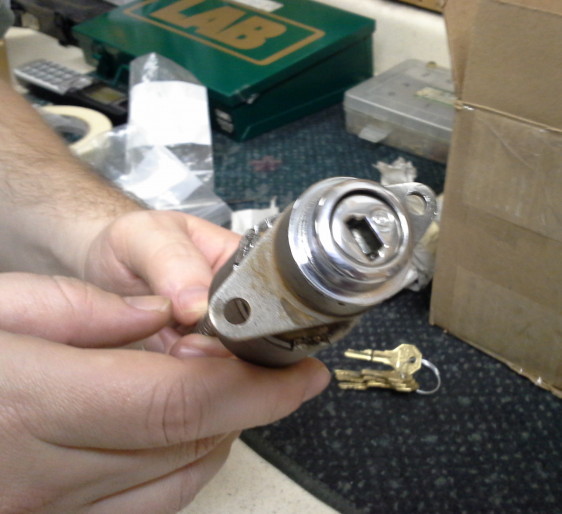
Above:
Ignition lock re-assembled after plating. NOTE: Plating process created a lot of residue in these locks and they had to be completely disassembled again, cleaned, and re-assembled prior to the return to the customer. It basically meant the whole process had to be done over.
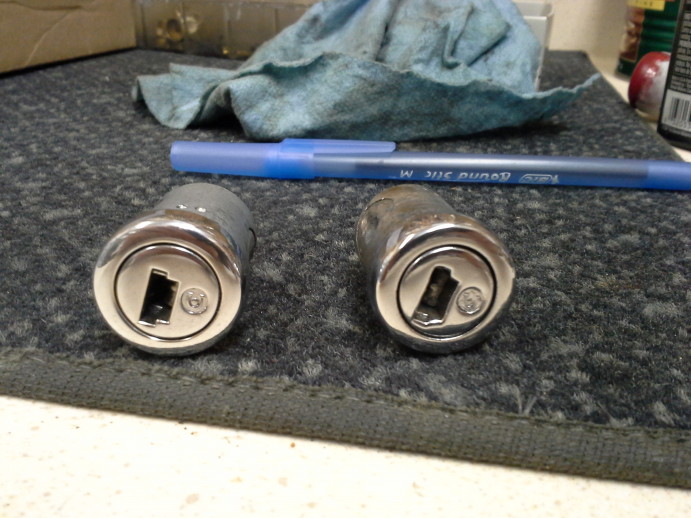
Above: 1936 Chrysler Airflow Door locks re-assembled after plating.
Below: 1948 Chrysler Trunk lock completed.
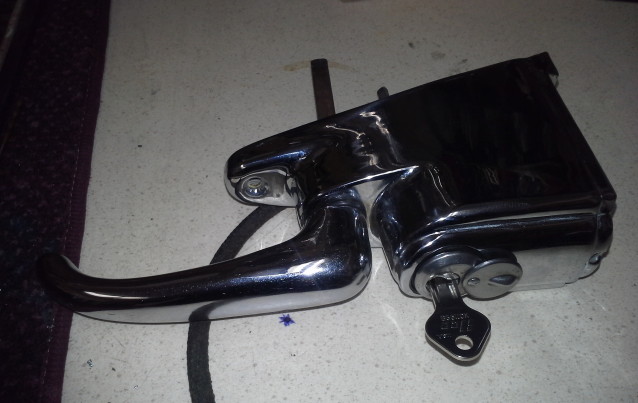
Above: Chrysler trunk lock brought into us to have keys fitted. Lock had to be picked to remove from the housing. The last pin tumbler was jammed in position with an unseated spring wrapped around it, which had to be drilled out and replaced.